
The most widely cultivated is the Oriental persimmon which matures in late fall and can stay on the tree until winter. Colors range from glossy light yellow-orange to dark red-orange depending on the species and variety with varying shapes and sizes, too. Astringent until fully ripe, persimmons develop a delicate honey-like melon flavor.
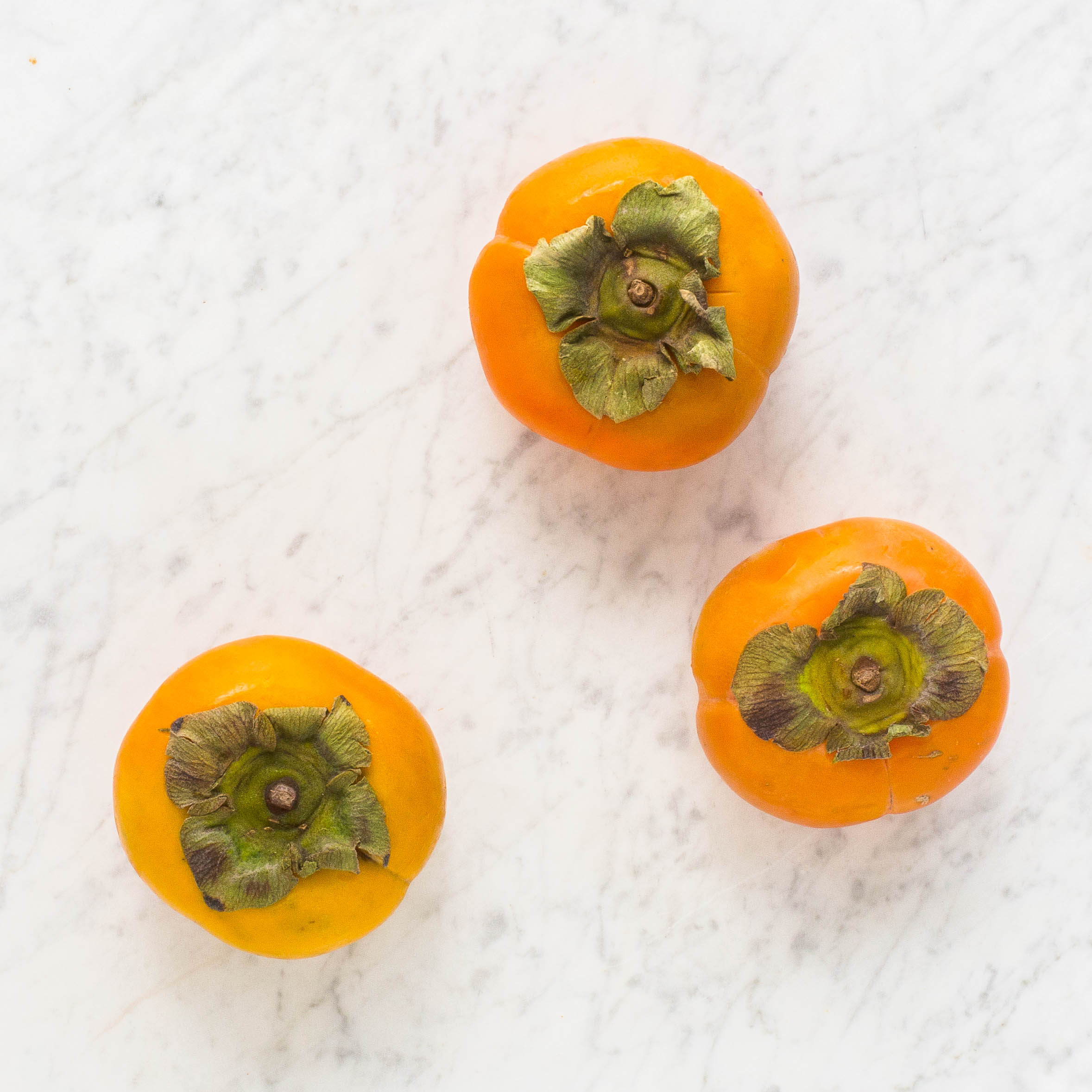
Our fruits are polyamorous, flitting from love affair to love affair.
However, they do marry well with the ingredients below.
Arugula, beet greens, Belgian endive, endive, escarole, frisée, kale, lettuce, radicchio, spinach, Swiss chard, watercress
Banana, cherry, cranberry, kiwi, melon, pineapple
Blood orange, clementine, grapefruit, lemon, mandarin, navel orange, tangerine
Soft or Crumbly Cheeses: Chèvre, cottage cheese, cream cheese, crème fraîche, feta, mascarpone
Almonds, black walnuts, hazelnuts, pecans, walnuts
Cardamom, cinnamon, cloves, ground dried ginger, mace, nutmeg, star anise
Bourbon, brandy, cognac, rum, whiskey
Almond (Amaretto), anisette, ginger, hazelnut (Frangelico)
Vanilla
Citrus: Lemon, orange, blood orange, tangerine
Vinegars: Champagne, sherry, white wine, herb vinegars, fruit vinegars
Herbs: Ginger, young ginger
COPYRIGHT © The Kitchen Garden Cooking School LLC 2023